The Long Road Back
A terrifying afternoon on an unfamiliar road became a story of survival, kindness, and unexpected protectors.
Written & Photographed by : Shashwat // Anirudh
I was standing alone at a fork in the middle of a forest region. Fully exhausted and dehydrated and that was when the real nightmare began.
Motorcycling, when spoken about from the comfort of a room, is almost always dressed in beautiful words. Freedom. Brotherhood. Adventure. The open road. The morning wind. These are the things we like to remember, and perhaps these are the things we ride for. But roads, like life, do not owe us only beauty. We remember motorcycling through its most beautiful moments. The early morning starts, the empty roads, the tea stops, the jokes shouted through helmets, the photographs taken beside lakes and hills. We speak of rides as escapes, as adventures, as small rebellions against routine. But there are some rides that do not stay within the language of freedom and fun. Some rides take you to the edge of what you think you know about yourself, about people and about fear. Sometimes, without warning, they strip away every illusion we have about control, courage, and the world around us.
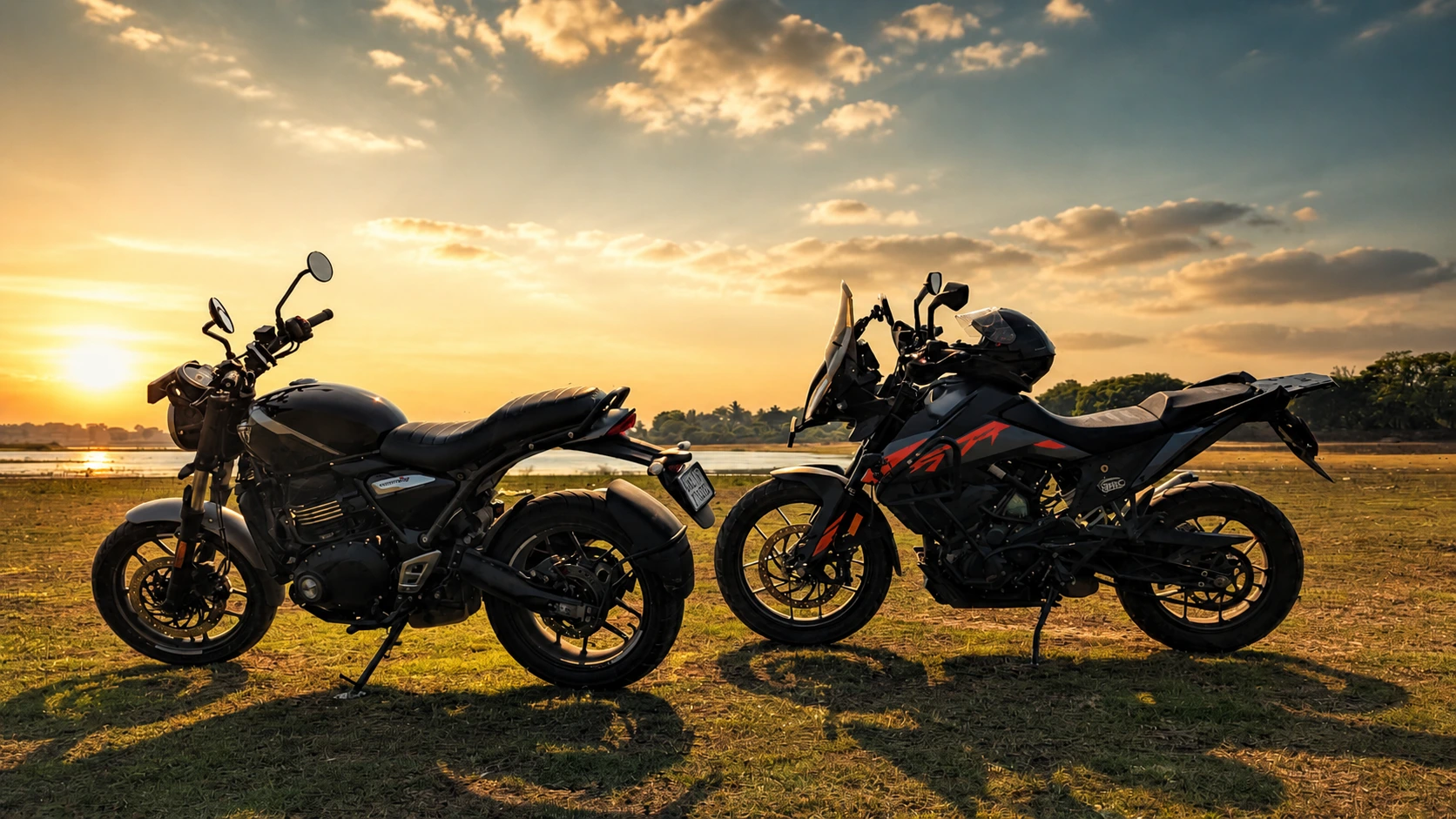
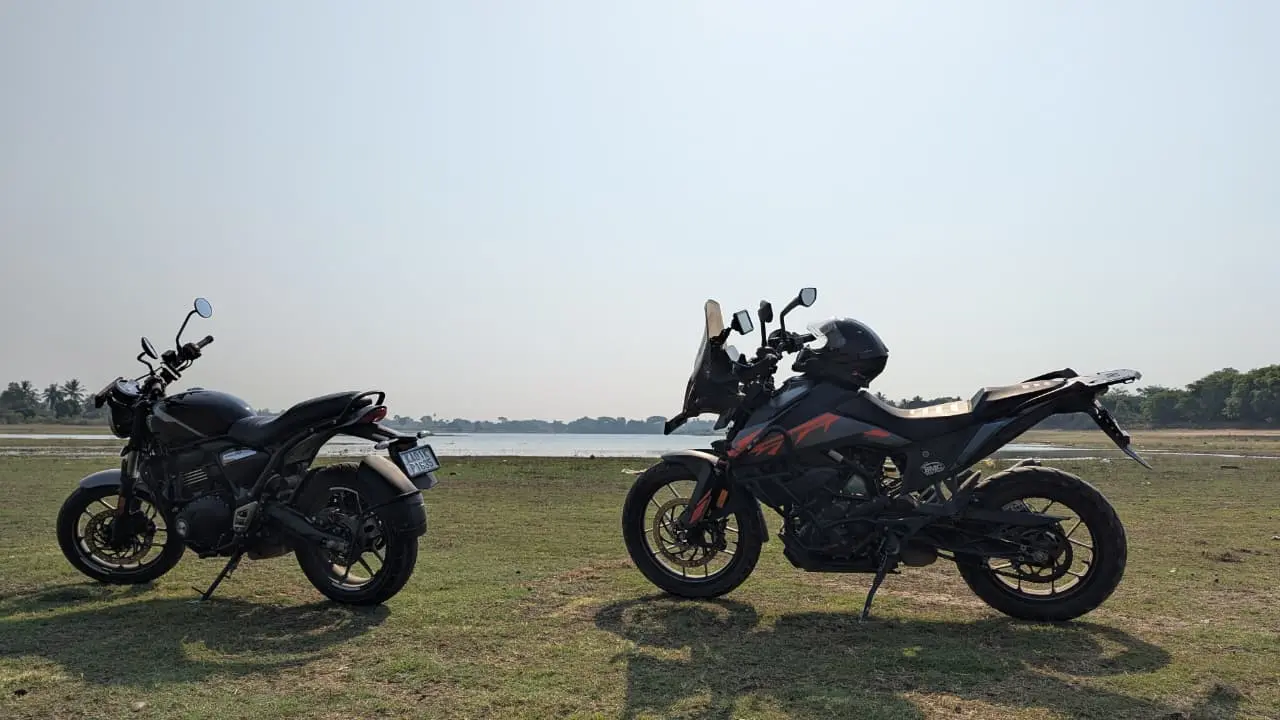
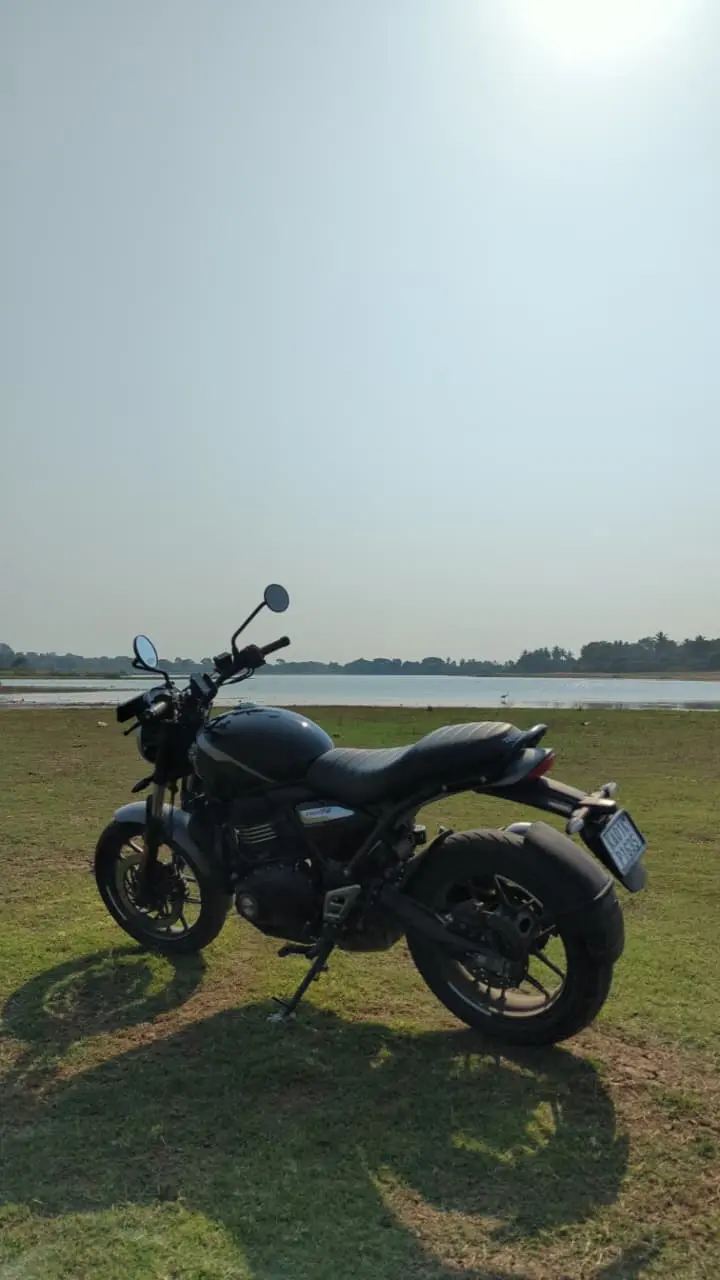
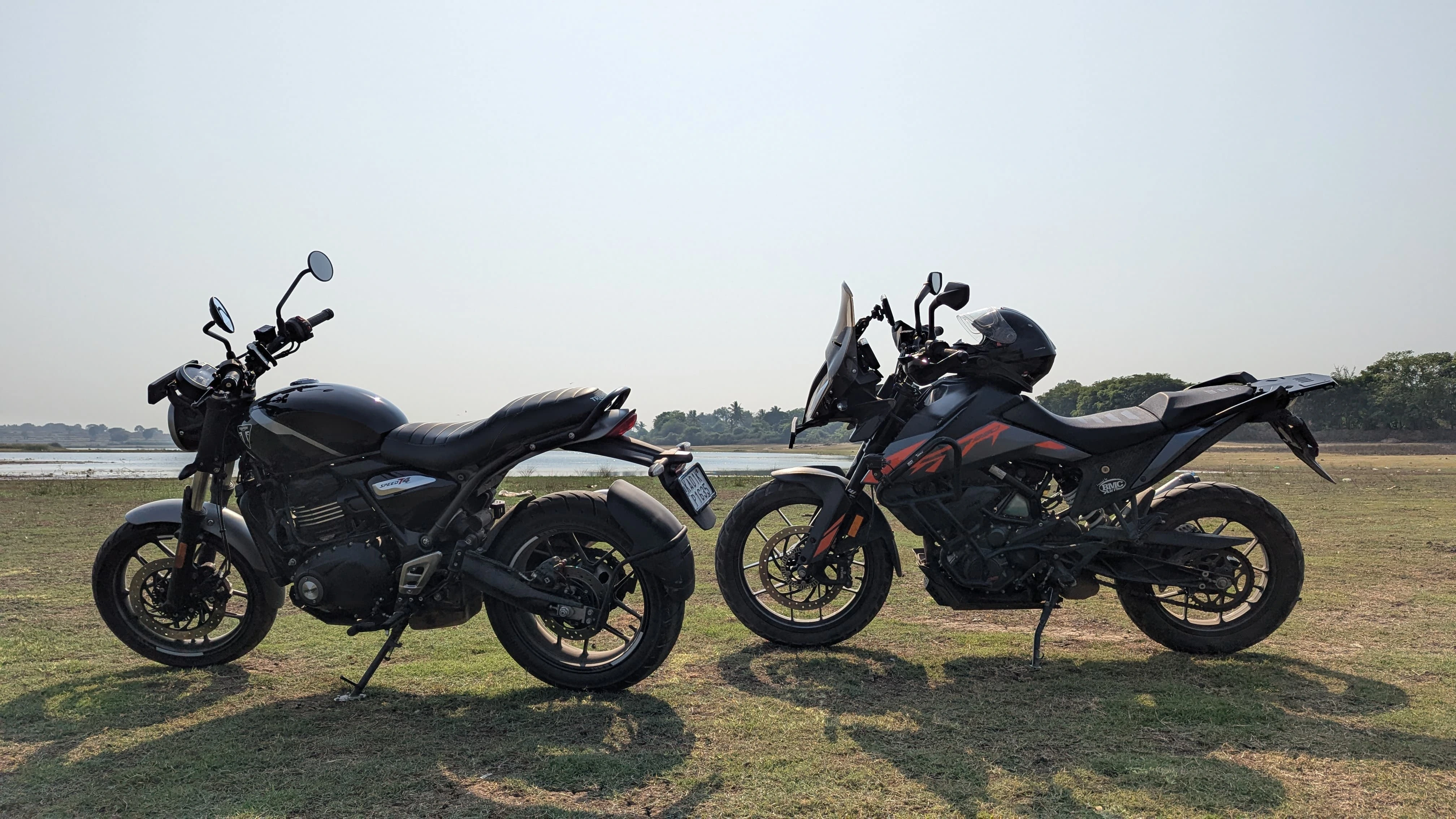
That morning, however, began with nothing but good vibes and great company. I was in Bengaluru for a few days, meeting family and friends, away from the usual rhythm of my own city. One of my friends had recently got himself a new Triumph T4, and like anyone with a new motorcycle, he wanted to take it beyond the city. For him, it was going to be his first proper out-of-town ride on the bike. For me, the problem was simpler and slightly more embarrassing. I was in a different city and did not have a motorcycle of my own. So I borrowed a relative’s KTM ADV 390, thinking I was merely borrowing a machine for a morning ride. I did not know then, that, by the end of the day, that same machine would become the only thing standing between me and a situation I still do not like replaying in my head.
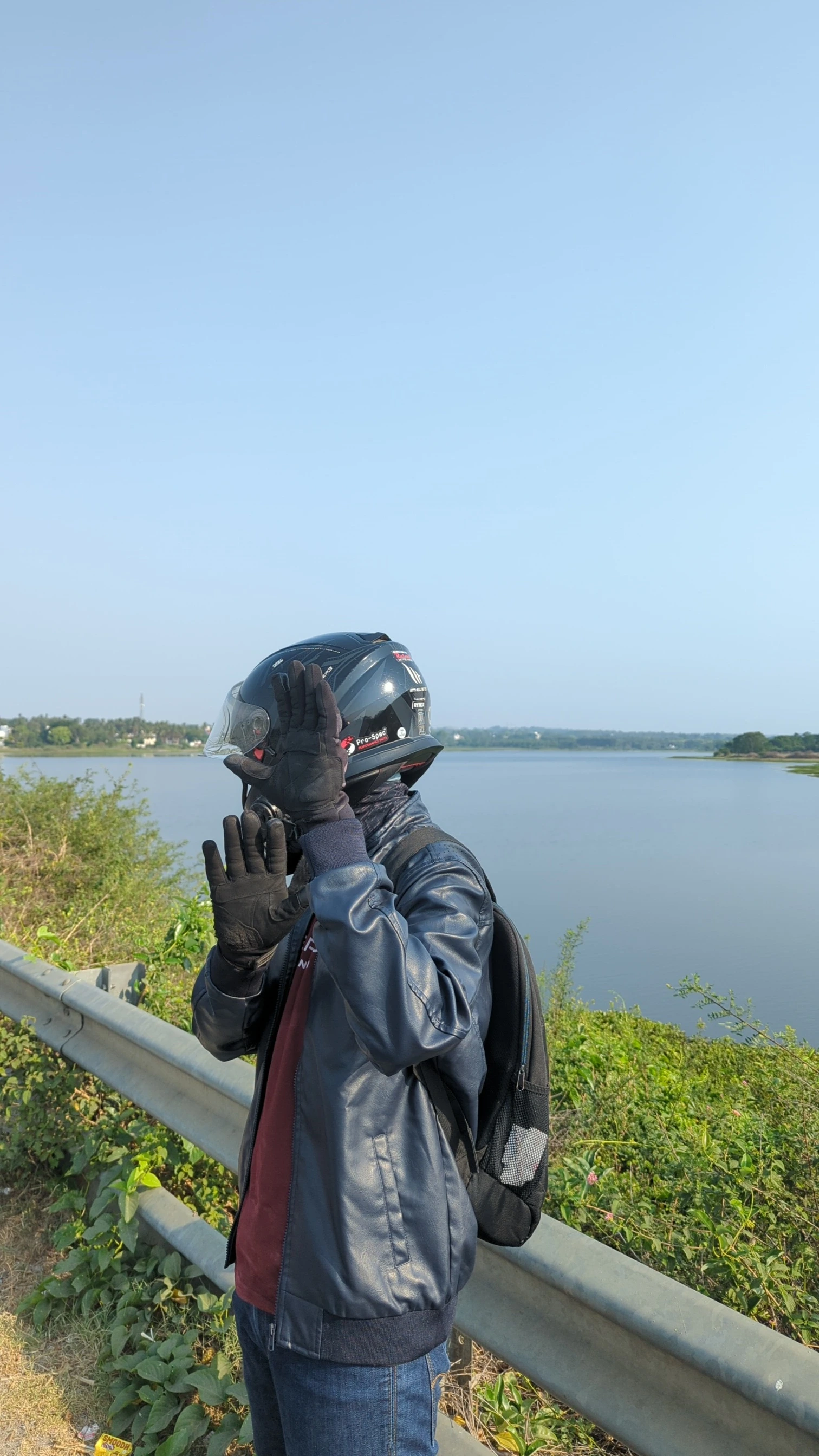
We had planned to leave at six in the morning, which, as any rider knows, is less a plan and more an optimistic declaration made the previous night. As usual, we didn’t manage to sleep on time to wake up early. The alarm continued to ring and I chose to ignore it dreaming about the beautiful views I was going to witness on my ride. Half-awake by now all I could do was negotiate with myself, “How much more can I sleep before, leaving becomes a necessity to avoid the dreadful Bengaluru traffic?”. But the thought of missing the ride or worse getting stuck in traffic felt worse than the heaviness of my eyelids. So I dragged myself out, got ready in that familiar half-awake state, and by around 6:20 am, I was standing beside the bike with my jacket zipped, gloves on, helmet secured, and the key turned in the ignition. My first stop was my friend’s apartment, barely ten minutes away from where I was staying. There was nothing remarkable about that short ride, and perhaps that is exactly why I remember it so fondly. The city was still not awake. Bengaluru had not yet become Bengaluru. There was no traffic or chaos or constant honking. All I could feel was cool air, empty stretches of road, and a few residents of this wonderful city moving through it before the hustle and bustle of the day begins.
The funny thing was, neither of us had any real idea about where we were going. At least, Not before we had already started moving. That, too, felt fitting for the morning. Some rides do not need a destination at the beginning, they only need enough willingness to leave. Somewhere along the way, we decided that a quiet lake would be the right place to ride to, especially before the April heat grew teeth and claimed the day for itself. So we pointed the bikes in that direction and rode out, cutting through the city streets as quickly as one legally and sensibly could, trying to escape Bengaluru before it fully wakes up.
Slowly, the city began to fall behind in our rear view mirrors and we kept moving forward. The change was almost immediate once the urban edges disappeared. Concrete gave way to open stretches and the road began to pass through farms, greenhouses, and patches of lush greenery that seemed far too beautiful to exist so close to the city. I was ecstatic. Inside the helmet, where excitement has nowhere to go, my face was gripped by the widest possible smile and the scenery forced me to use a softer throttle hand. The KTM, of course, wanted the opposite. It wanted me to push and stretch its legs on those open roads. I could feel that eagerness beneath me every time the road opened up. But I could not bring myself to rush through that landscape. This was not a route I was going to attack, I was going to savour this. Coming from Delhi, where one often has to ride nearly two hundred kilometres before the world begins to look this generous, I knew better than to waste a morning like that.
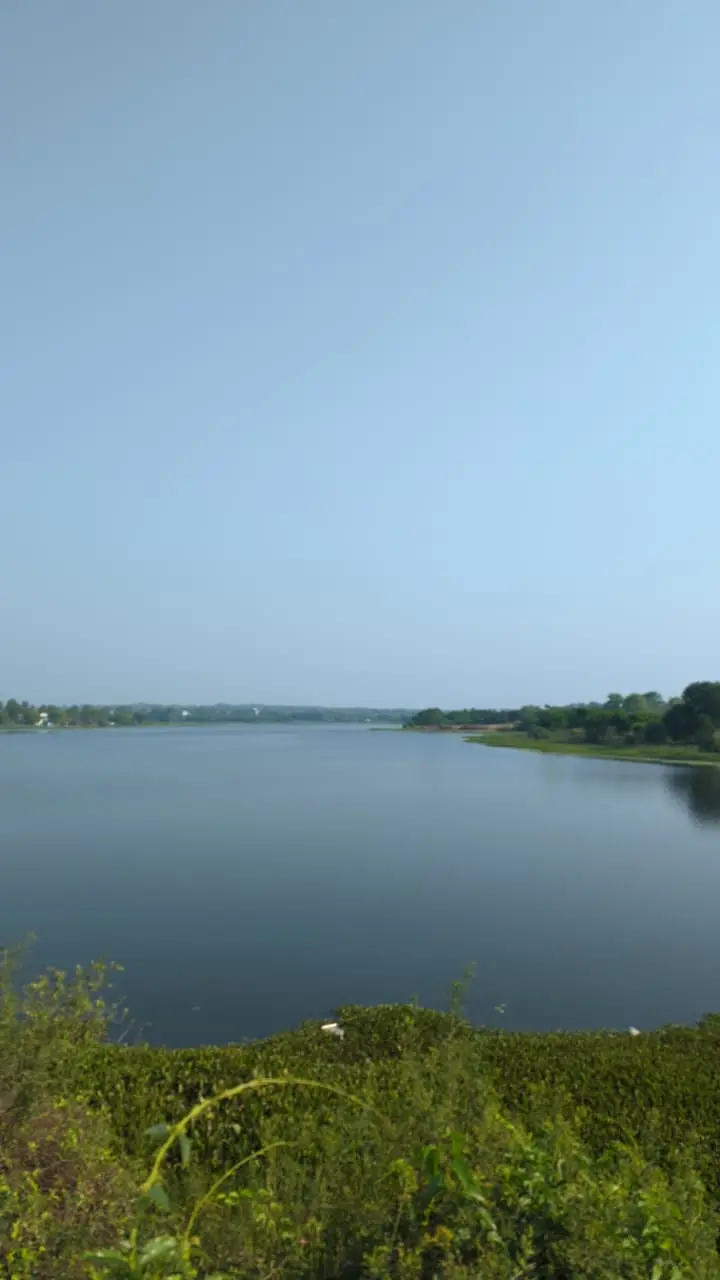
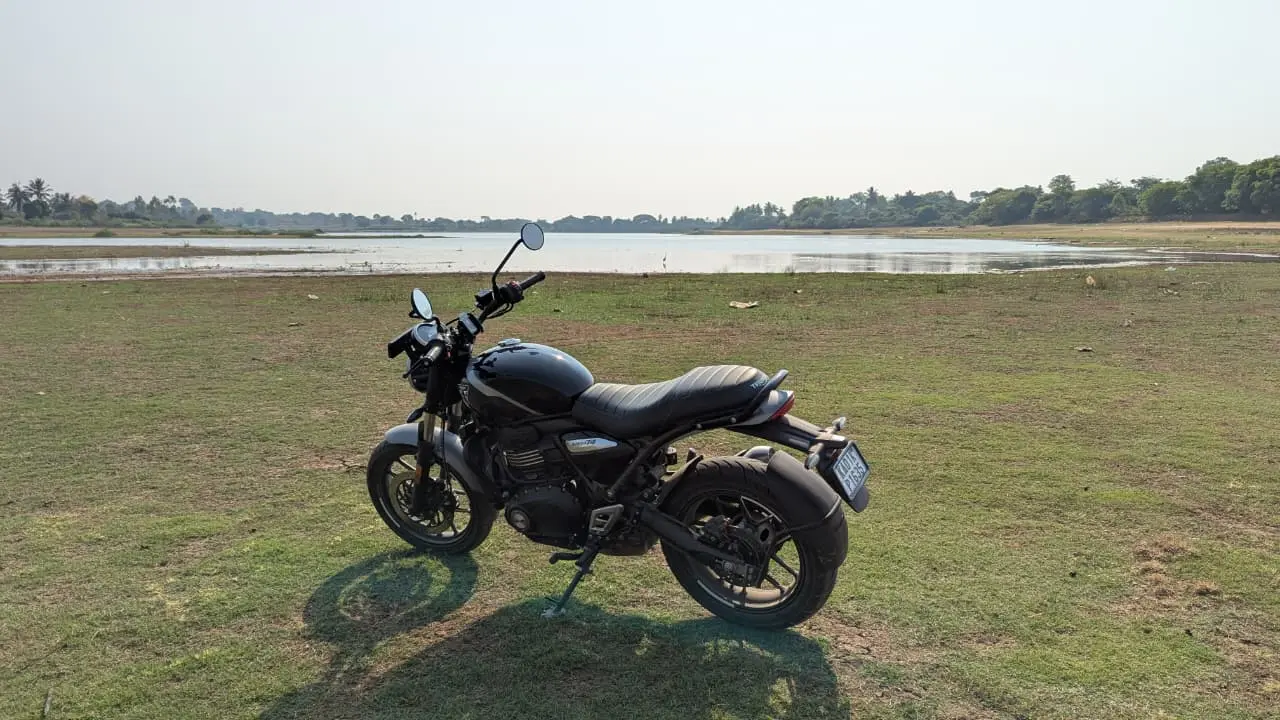
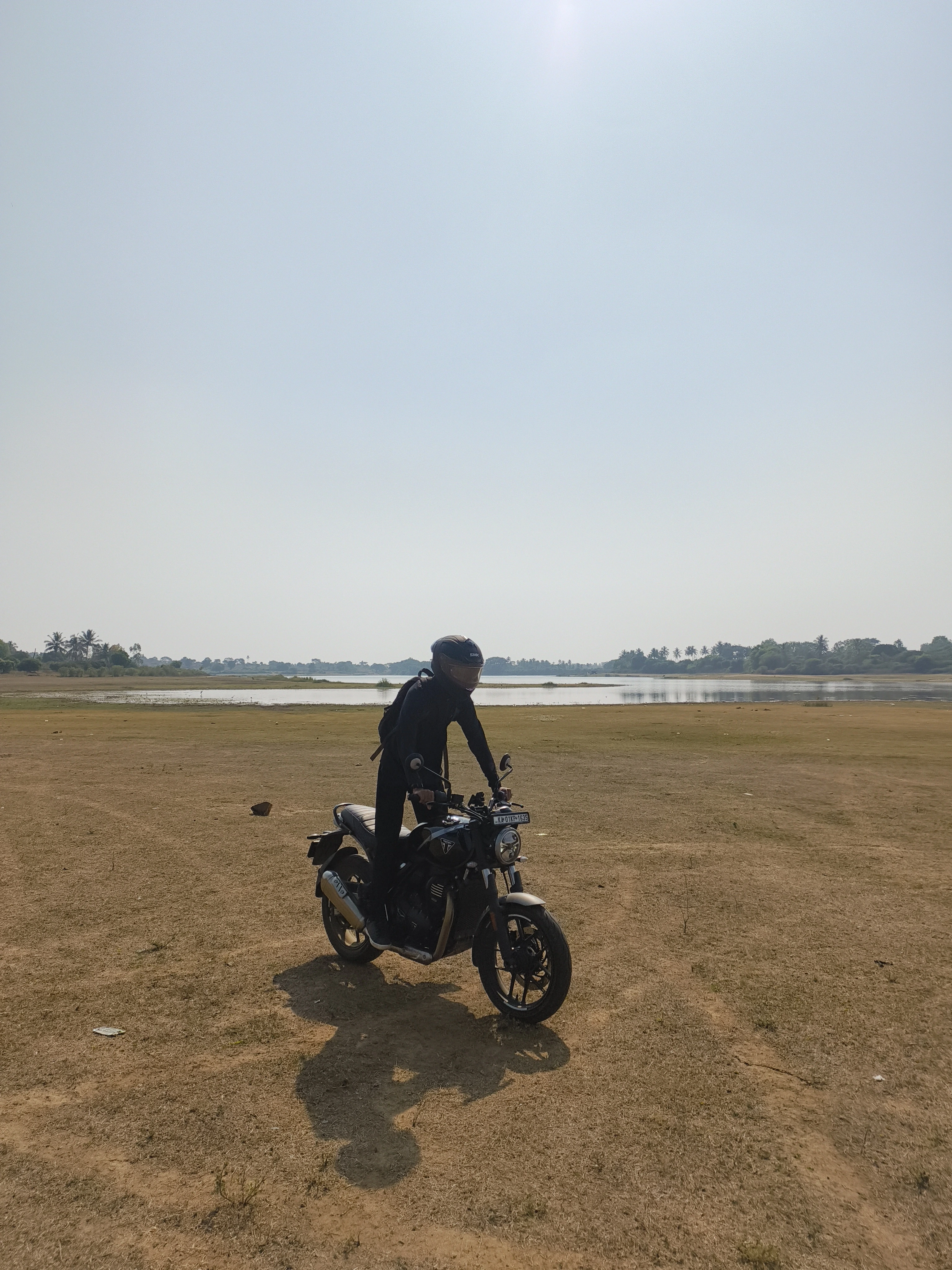
Around seventy kilometres in, we reached Vanamma Lake. The place was almost startlingly empty, as though it had been left undisturbed for our arrival alone. We took a few rough off-road paths to get closer to the water, easing the bikes down toward the lakeside until the noise of the road had fully disappeared behind us. There was nothing there except the two of us. The lake was still and a mild wind was moving gently across the water. After the noise and fatigue of the previous work week, it was a small pocket of peace. All we had to do was nothing, except pausing long enough to take notice and be enamoured by the beauty of it all.
For a while, that sense of calm and relaxation was good enough. We stood around, took in the view, did a little off-roading besides the lake, and gave ourselves the simple pleasure of being nowhere urgent. But riders are rarely built for stillness for very long. There is always something restless beneath the calm. The road was calling to us again. Our hands were not yet tired, our backs had not yet begun to complain, and the day still felt far too alive to be concluded beside a silent lake. So after a brief photo session, we got back on the bikes and set off again.
It did not take much to convince ourselves that the ride could be stretched a little further. We had the time, we had the energy, and perhaps most importantly, we had two motorcycles beneath us that made the idea of turning back feel almost wasteful. Somewhere ahead, a billboard made the decision for us. It pointed toward Hogenakkal Waterfalls, eighty kilometres away. That was all the persuasion we needed. There are moments in a ride when a plan expands without discussion, when both riders understand at once that the day is not over yet. This was one of those moments. We looked at the sign, accepted it almost immediately, and decided to keep going.
About ten kilometres later, at around 10:30 in the morning, we stopped for breakfast. Vada and Pongal. It was savoury and immensely satisfying. Hunger, after a good stretch of riding, has a way of making simple food feel memorable, and that breakfast was exactly that.
But by then, the sun had begun to reveal its real nature. It was not unbearable yet, but it had started pressing down with intent. The morning coolness was gone, and its place was taken by the April sun’s growing warmth. Still it was manageable because the motorcycle was moving. As long as we were climbing and descending through the hills we could convince ourselves that the heat was only background noise. The road still had our attention, and for a few more hours that was enough.
We rode through the forests of the Cauvery Wildlife Sanctuary and the undulating stretches of the Eastern Ghats, and the landscape continued to do what good landscapes do. It kept us distracted us from any discomfort. But by the time we finally reached Hogenakkal, the sun was directly above us, no longer offering warmth, but punishment. The leather jacket that had felt reassuring in the morning now felt like a heavy, heated shell wrapped around my body. Sweat had begun to disappear faster than it could gather, and I could feel the first signs of dehydration settling in. Even the destination itself, with its crowd and noise, did not offer the relaxing reward we had imagined when we first saw that billboard.
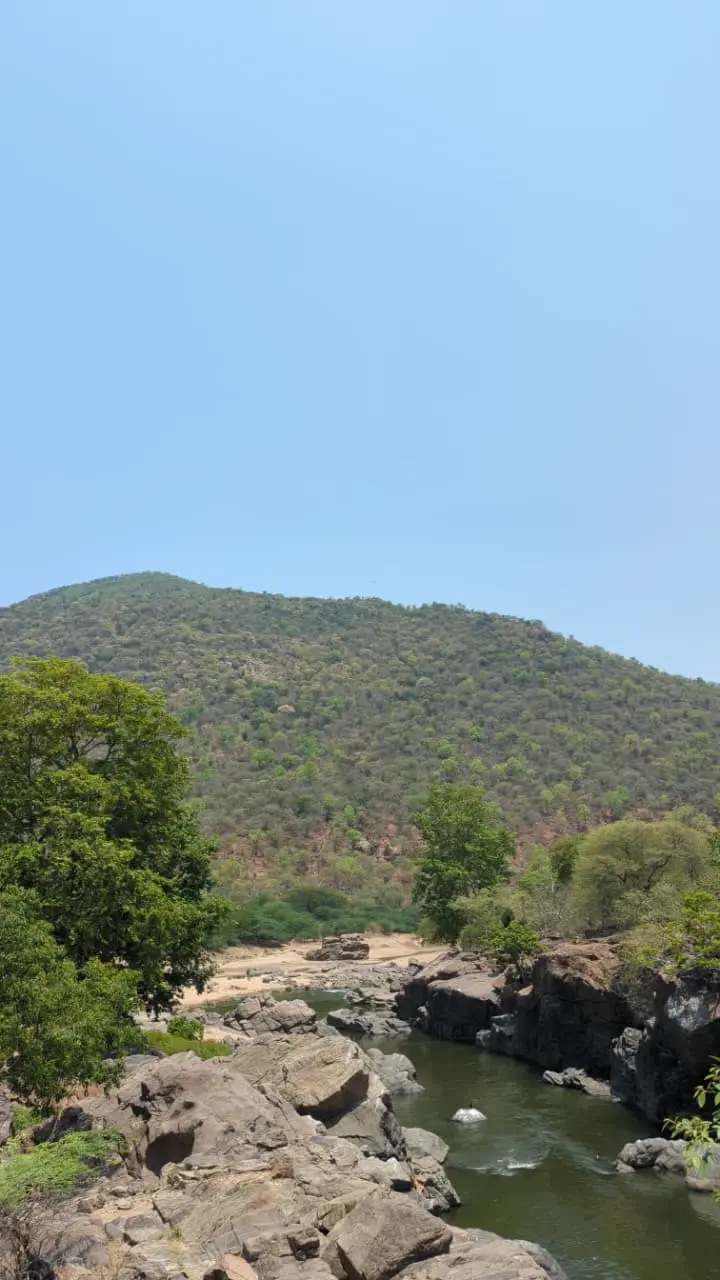
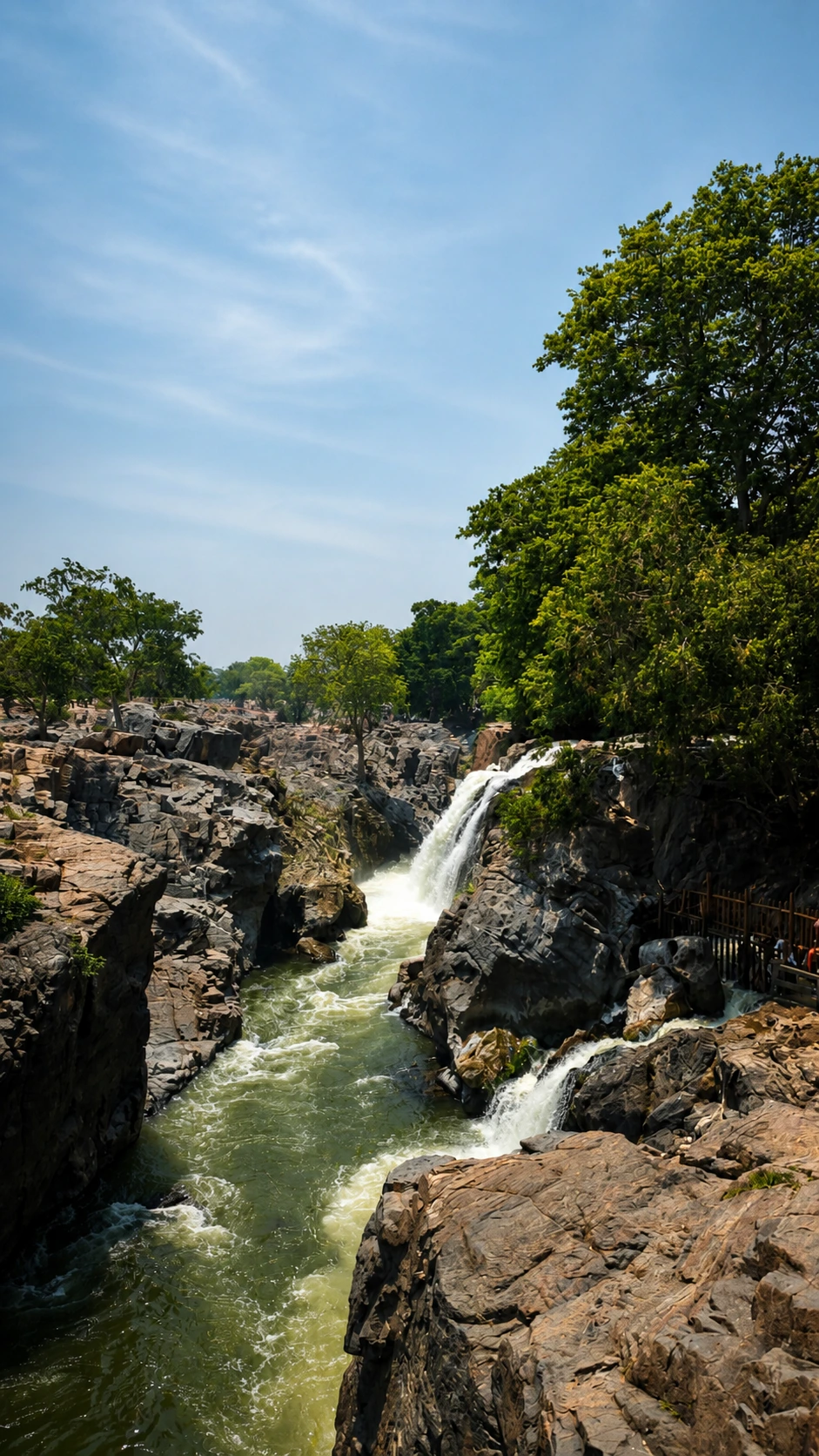
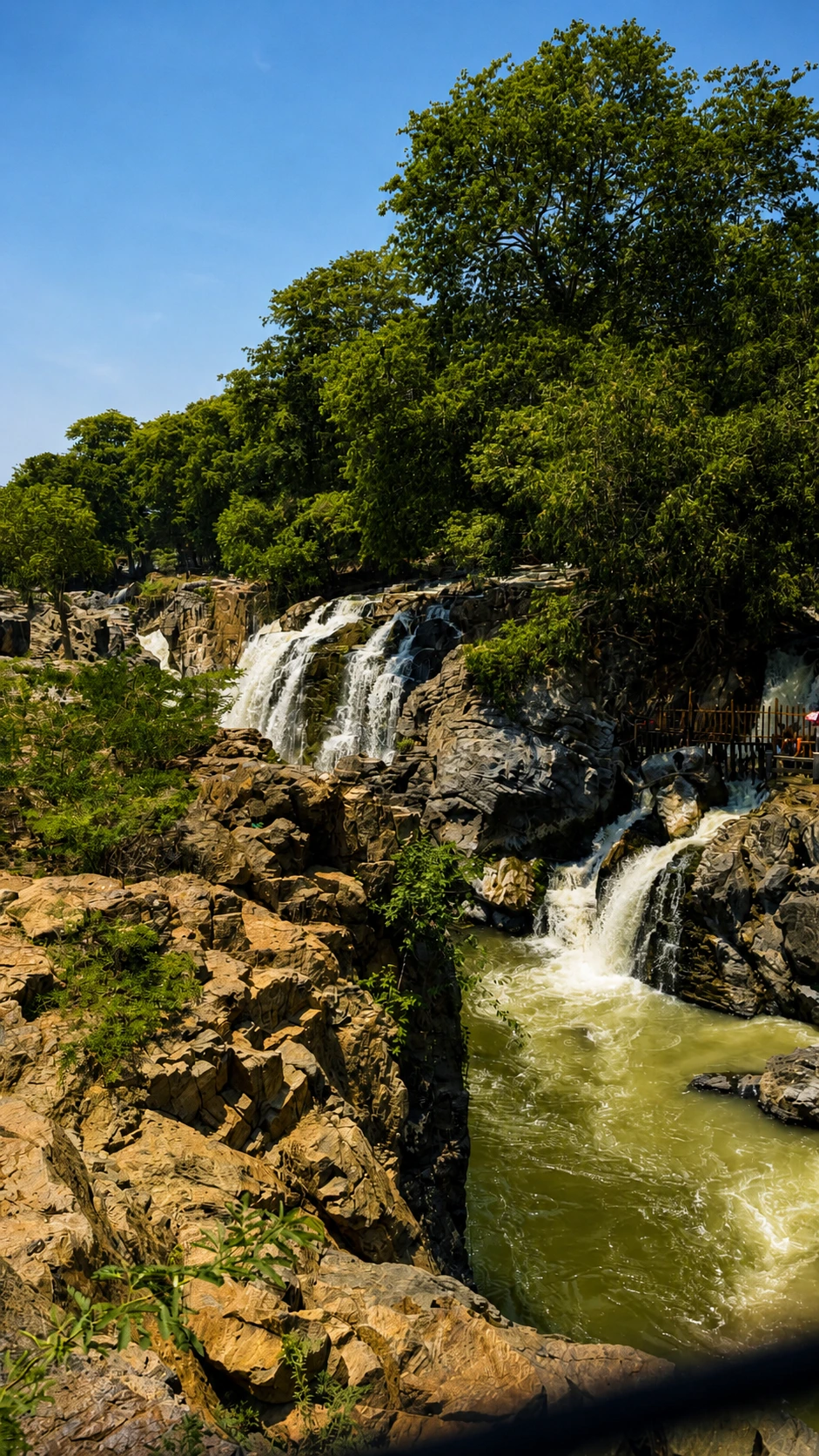
Still, it had its saving grace. We spent a couple of hours around the river, finding whatever shade we could, standing on the hanging bridge, watching the water force its way through the rock formations while people around us laughed, posed, shouted, and enjoyed themselves in the full brightness of the afternoon. It was definitely not the quiet escape we had found at Vanamma Lake, but it was still an enjoyable destination. For a while, we rested ourselves and enjoyed the humming of the waterfall.
Eventually, it was time to leave. What we had not properly considered, or perhaps had simply chosen to ignore, was that it was now around two in the afternoon. The heat was no longer rising, it had arrived. But we were still in that young, slightly foolish state of mind where confidence often passes for planning. We walked back to the parking area, drank as much water as we could, added lemon soda to convince ourselves that we had done the responsible thing, secured our bags, checked the maps, pulled our leather jackets back on, and prepared for the return ride as though hydration alone could protect us from the afternoon.
We had barely been on the road for two minutes when the day character of the day changed.
The traffic became unbearable. A single-lane road had become a clogged artery of buses, trucks, cars, and impatient riders, each one blocking the other. Through the heat and noise , everyone was hoping that they could somehow create some space and escape this ordeal. My friend, on the smaller and more nimble Triumph, was able to find gaps and slipped through whenever the road allowed him half a chance. I tried to follow, but the KTM being a relatively bigger bike, made it way more difficult for me.
The sun made everything worse. Every time the bike stopped, the leather jacket trapped more of it, the engine added to it, and the road threw as much of it back upward as it could. Each second of stillness felt stretched beyond reason. It was as if time itself had slowed down just to make the discomfort more complete. The sun’s rays seemed to pierce through the jacket and reach my skin like a thousand pointed needles. I could feel the water leaving my body, physically, with each passing minute in that unmoving line of vehicles.
The traffic moved inch by inch, and so did I. Whenever a gap appeared, I took it. Whenever the bike leaned awkwardly, I fought it back upright. My clutch hand began to ache, my back started stiffening, and my concentration narrowed to the small patch of road ahead of my front tyre. Narrow, crowded roads are no place for top-heavy adventure bikes, especially not when the rider is tired, overheated, and trying to keep up with someone who has already slipped far ahead. There were moments when I genuinely felt I might faint. My body was beginning to shut down.
But I kept pushing because that is what we tell ourselves that riders do. We push through the hard parts to enjoy the beautiful ones. We endure the heat, the traffic, the tired hands, the aching backs, because somewhere beyond all of it there is usually a good road waiting. But this time, the equation had started to fail. The hardship was no longer part of the fun. It had become too much. I began imagining myself dropping the bike deliberately, dragging it somehow to the side of the road, and sitting down anywhere I could, even if there was no shade, even if all I got was a few minutes of stillness without the weight of the machine beneath me.
And just as I was beginning to accept that as a real possibility, the traffic finally opened.
The road cleared and the bike started moved freely again. I escaped that suffocating stretch as if I was released from a furnace. For a moment, I should have felt relief, and perhaps I did. But it was relief hidden deep inside the cave of exhaustion. The heat had taken more out of me than I understood and although the traffic was behind me, the damage it had done was already affecting my riding style. My back had started aching, my core felt as though it had resigned, and I could no longer sit upright with the same ease with which I had begun the day. My clutch hand felt like it had been through a massive workout, veins popping out, fingers tired, wrist stiff from the endless stop-and-go punishment of that narrow road. By every reasonable measure, I was already spent. The problem was that the ride was nowhere close to over. There were still more than 120 kilometres to go, but now I was alone too.
My friend had slipped through the traffic long before I could fight my way out of it. I knew he would not have stopped randomly in the middle of the forest stretch. Under normal circumstances, not stopping would be the sensible thing to do since we had planned stops. We had the basic understanding that riders often have when travelling together normally. But my condition was no longer normal. The heat had hollowed me out, the traffic had broken my rhythm, and the road ahead felt much longer than it had in the morning.
I had also made one of those small mistakes that seem harmless until it is not. I had not set up my maps before leaving Hogenakkal because I assumed I would follow my friend all the way back. It was a simple assumption, almost too ordinary to question at the time. He knew the route and had even put on the map, I would stay behind him, and we would ride back together. But the road had already separated us, and now that assumption had turned into a problem. I was on a borrowed motorcycle in unfamiliar territory while being physically exhausted, and moving without navigation.
For a while, the road was kind enough to remain straightforward. There was only one clear way ahead, so I kept riding. But roads have a habit of becoming complicated exactly when you are least prepared for them. After some distance, the road split. A fork in the road. To go right or left, that was the question.
It should have been a small decision, had I had Google Maps at my disposal. But there was no signal. I neither had access to any map nor any way to call my friend. The forested landscape around me, which had felt so beautiful a few hours earlier, now felt empty and lonely. The silence, which felt peaceful a few hours earlier, now felt isolating.
I stopped and tried to stay calm. A rider, after all, does not surrender so easily. At least that is what I told myself. I removed my helmet and gloves, pulled out my phone, and began trying everything. In that moment it was desperation that was dressed up as logic. I switched SIMs. I turned airplane mode on and off. I lifted the phone slightly, shifted around, waited, checked again, hoping that by some small miracle even one thin bar of network would appear long enough for the map to load. But nothing.
I was standing alone at a fork in the middle of a forest region. Fully exhausted and dehydrated and that was when the real nightmare began.
I have always liked to believe that I am a brave person. Not reckless or foolishly fearless, but reasonably steady when things become difficult. At least that is what I believed until that day. Because that day I learned that courage is much easier to claim when you are rested, safe, and imagining danger from a distance. It feels very different when you are standing alone at a fork in a forest road, exhausted, dehydrated, without signal, without navigation, and with no familiar face anywhere in sight.
As I stood there waiting for my phone to find even the faintest trace of network, two men on a Pulsar approached and stopped beside me. They looked like locals, and at first, I did not think much of it. People stop on roads all the time. So I kept my attention on the phone, still hoping that one bar of signal would appear and rescue me from the uncertainty of that fork. But the longer I stood there, the harder it became to ignore the men on the Pulsar.
They did not ask if I needed help. Nor did they make any gesture or say anything that could be understood as friendly, curious, or even mildly concerning. They just kept stared. It was not a passing glance either, It was fixed and deliberate, as though measuring me from head to toe, studying the bike, the gear, the situation, and perhaps most importantly, the fact that I was alone. For nearly two minutes, that stare continued, and with every passing second I started growing more concerned.
At first, I told myself I was overthinking. Fatigue, heat and isolation together can do that. The more he stared the more uncomfortable I got and soon enough, I just wanted to get out of there. Something felt really wrong. The presence of those two men had now changed the nature of the ride entirely. I began putting my gloves back on and that was when they made a phone call.
I could not understand the language they were speaking, and perhaps, on any other day, that would not have mattered. But on that road, in that state, every unknown thing became a threat. I had heard stories before. Stories of people being robbed on lonely stretches. Stories of motorcyclists being stopped, cornered, stripped of their bikes, sometimes worse. Most of the time, such stories remain in the background of your mind, filed away as warnings that happen to other people. But standing there, with no signal and no help, they all came rushing back with a cruel clarity.
By the time I had my helmet on, a second Pulsar had arrived. And with it, the situation became something my mind could no longer dismiss. There were now four of them. What truly froze my attention was the thick yellow jute rope one of the men on the second Pulsar was carrying. In that moment I was truly helpless. I do not know what they intended. I cannot honestly say what would have happened had I waited. I did not want to wait for proof that my fears were justified.
In that moment, the possibilities became horrifyingly vivid. I imagined being overpowered, tied somewhere in that wildlife sanctuary, left helpless while they disappeared with the motorcycle. It may sound extreme from the safety of a room, but fear is not reasonable when your body is already broken and your mind is running ahead of reality. I am by no measure a small person either, and on another day, in another place, with a clearer head and a stronger body, I could at least have attempted to defend myself. But that afternoon was not another day. The heat had drained me, the traffic had weakened me, and the uncertainty had already shaken whatever confidence I was carrying on my way back. Against two men, I might have imagined fighting back. Against four, in that condition, I could not even afford the luxury of fantasizing about fighting back.
My mind had already started building stories. How quickly would they close in? Would they beat me first? Would anyone hear me if I shouted? Would any passing vehicle stop, or would people simply slow down, look, and leave because it was not their problem? Would this lonely fork in the road become the last place anyone knew I had been? Every terrible possibility flashed through my head with a speed and clarity I had never experienced before. My body was drained, my confidence had collapsed, and I was in panic mode. But strangely, beneath all that fear, one small, thinking part of my mind was still working.
In less than a second, I started moved. I turned the kill switch back on, slotted the bike into first gear, let the clutch out far too quickly, and pulled the throttle harder than I should have. For a terrifying fraction of a moment, I thought the bike might stall. Had it stalled there, in front of them, I do not know what I would have done. But the KTM did not betray me. It lurched forward violently, protesting against the ugly combination of too much throttle and too little clutch control, but it moved. And that was literally all I needed.
I took the road on the right without knowing whether it was the correct one. At that point, direction had become secondary to escape. I just needed to put distance between myself and those men. I quickly shifted up the gears 2nd, then 3rd, then 4th, then 5th. I was neither calm nor composed. I was not riding with skill or confidence or any of the romantic things we like to associate with motorcycling. I was terrified. Properly and completely terrified. I do not think I had ever been that scared in my life. The road ahead was a hill road, full of corners and bends that deserved patience, judgment, and respect, but I had none to offer in that moment. I was doing speeds I should not have been doing there, around 80 Kmph at places where the road could punish even a small mistake. But fear had narrowed my world to one simple need, “getting away”.
When I reached the first hairpin bend, I allowed myself one desperate hope. Maybe the turn would break their line of sight. Maybe they had no nefarious plans against me. Maybe they had only meant to scare me. Maybe I would look into the mirror after the bend and see the empty road. But that was not to be and they followed.
In hindsight it was almost absurd, had I been in any state to think of it properly. Two Pulsars chasing a KTM ADV 390 through the hilly roads of the Eastern Ghats. I had the more powerful motorcycle. I had the better suspension, better brakes, and enough performance to pull away. But when fear strikes, the brain does not respect specifications. In a crisis, horsepower and rational comparisons disappear almost immediately. All that remains is the road in front of you, and the desperate need to stay ahead.
I pushed as hard as I dared, and perhaps harder than I should have. Anyone who has ridden enough in India knows that the road can change character without warning. One moment it can be smooth enough to invite confidence, and the next it can collapse into broken tarmac, gravel, potholes, sand, and loose stones scattered across the surface like a trap. That is exactly what happened. The road suddenly turned rough. I could still see them in the rear-view mirror. That was enough to keep the fear alive.
The KTM was in road mode and ABS still doing what it was designed to do.
Those settings, however, were strangely irrelevant on a surface that seemed determined to behave more like an off-road trail than a proper road. I was trying to carry speed through all of it, trying to leave my pursuers behind, at points where, on any sensible day, I would have slowed down, stood on the pegs, and let the bike move beneath me. But sense had already been replaced by survival. In the trickier sections, I began doing the very thing experience teaches you not to do. I started putting my feet down at speed, trying to balance the bike by instinct, hoping that if it kicked sideways or lost composure, I would somehow be able to save it. Any experienced rider reading this would immediately know the mistake. I should have been saddling, letting the suspension work, keeping my weight balanced and my eyes ahead. The strange part is that I knew this too. I had crossed that very stretch earlier in the day while saddling properly, and the bike had handled it without much drama. Under different circumstances, I could have ridden through it with control and perhaps even used that bad patch to lose them. But conditions on that day were far from ideal for me. That day I truly understood how and why people make stupid mistakes in times of crisis. Fear and panic has a way of blocking access to the knowledge you already possess.
All my training, experience, and every sensible instinct I had developed over years of riding seemed to vanish behind the single thought that I had to stay upright and keep moving. So instead of riding the motorcycle the way it was meant to be ridden, I began fighting it. I straddled through rough patches giving the men behind me time to close the gap. The only small comfort was that I now knew I was on the correct road, since I recognized this patch from earlier that day. But this reassurance held little value as, I was still panicked. I kept pushing, and then the road delivered its lesson with brutal clarity. I hit a pothole.
The suspension absorbed enough of the impact and for a moment it seemed as if I had escaped the mistake. But in trying to steady myself, I put my left foot down again, and this time it struck the tarmac hard. It was a violent impact that travelled through my boot and up my leg before I could even understand what had happened. The force of the impact was so sharp that the sole of my riding boot tore off almost immediately. The shrieking pain was almost immediate and impossible to ignore.
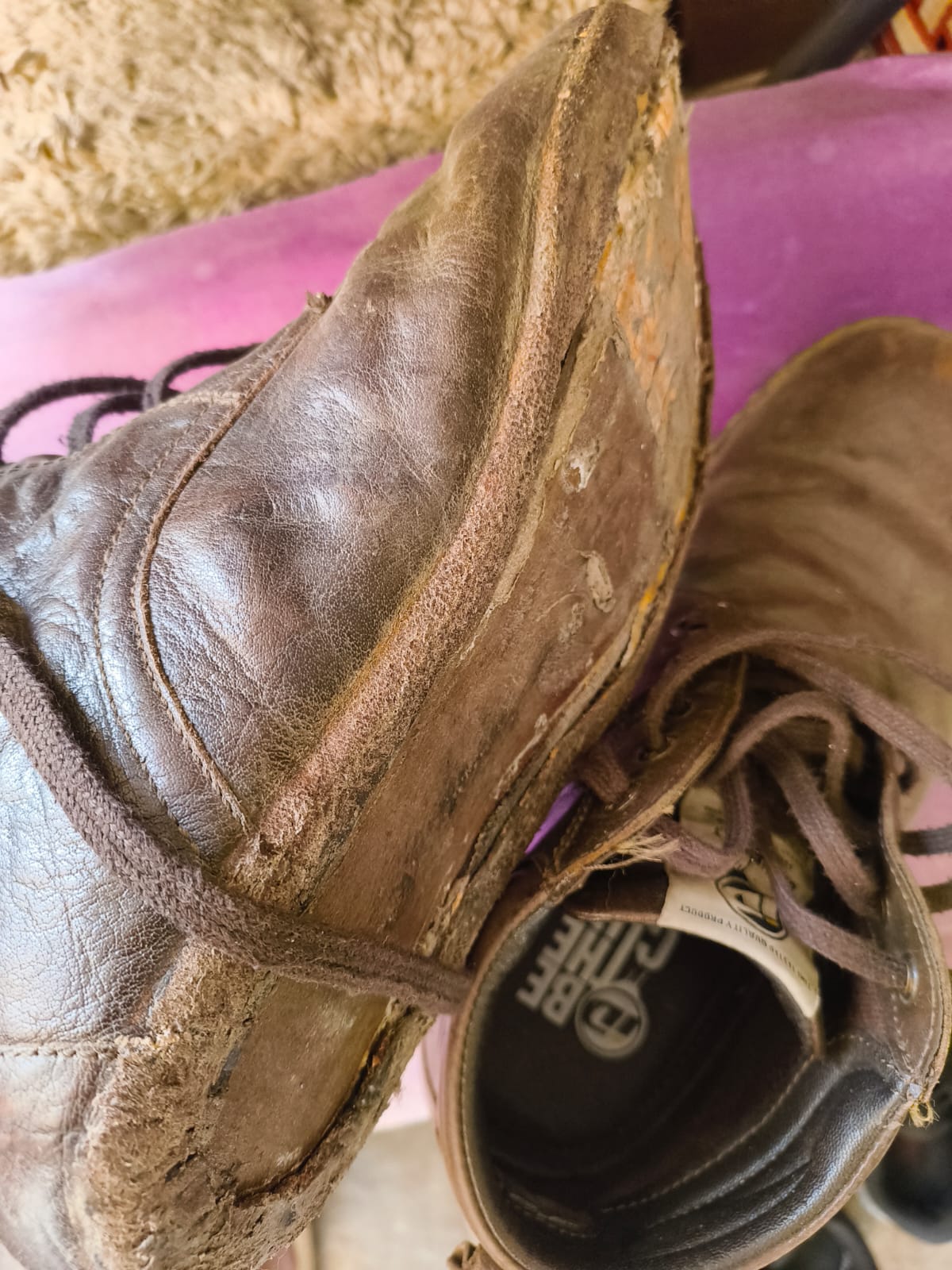
By then, I was riding with an aching back, a body emptied by heat, a clutch hand that had already been punished by traffic, and now a left leg throbbing from the impact. Behind me, two Bajaj Pulsars were still somewhere on that mountain road, and ahead of me was nothing certain except the need to keep going. I had no intention of surrendering to that road or to that fear or to the men behind me without using every last bit of strength I had left. If I was going to fall, I would fall trying to escape. If I was going to get hurt, I would be hurt while moving. But I was not going to stop and surrender to my fate.
The chase continued, but through all that a small part of my mind was still trying to stay useful. I was grateful that it had not completely abandoned me either. And perhaps, as I had begun to believe from the start of that strange day, the motorcycling gods had not entirely deserted me. Soon after the injury, the rough stretch finally ended. The surface improved and I no longer had to fight it through every metre of broken road. For the first time in what felt like forever, I could ride without putting my feet down and without bracing for the next pothole. A few kilometres later, I finally saw a small roadside restaurant, or more accurately, a “tapir”, with enough people around it to make the place feel like safety. In that moment, it was the most reassuring sight I could have asked for. There were people there, and that was enough. Even if they were strangers, their presence meant that whatever my pursuers had intended could not happen unseen. The road had been lonely for too long, now, at least I had witnesses.
I rode straight into the shop and stopped almost abruptly. I had used up the last bit of my courage to carry myself there. When I got down, I was panting, shaken, and completely drained. My body felt hollowed out by heat, fear, and pain. I could still see the men in the distance, still lingering far enough to remain a threat in my mind, but they did not come down to the shop. They stayed away, and that distance gave me my first real breath since this ordeal began.
I went to the first two people I could find and told them what had happened. I do not know how clear I sounded or if my words came out in the right order. But they understood enough. Only a few kilometres earlier, I had felt my faith in people collapse under the weight of suspicion and fear. Now, almost immediately, strangers began repairing it. They helped me sit, told me to calm down, offered me water, and looked toward the road to check on the men who had been following me.
After a while, they saw the men turn around.
That was the moment the immediate danger finally began to feel distant. I relaxed a little, though my heart was still racing and my hands still carried the memory of the chase. The fear had not yet left me completely. I knew I was safe for the moment, but I also knew I did not have the courage to continue alone.
My phone still had no usable signal and I still could not reach my riding partner. I still did not know exactly how far ahead he was. But the two people I had spoken to had already offered me the chance to ride with them for a while. Their destination was not the same as mine, but that hardly mattered. Safety does not always arrive in the exact direction you planned to go. Sometimes it comes as company, as two strangers willing to let you stay close until your fear stops making every empty stretch of road feel dangerous.
I did not need to think twice about it and I accepted the offer immediately. Without resting for too long, we set off again. The ordeal, at least for the moment, had ended. I followed them closely, perhaps closer than I normally would have. And with every kilometre we covered together, the road began to feel safe again. The trees were just trees again, the bends were just bends and the vehicles passing by were just vehicles, not possible threats.
The farther we went, the safer I felt. And after some time, almost without noticing the exact moment I realized that the chase was truly over. The fear was no longer in control of me. I could breathe again. I could think again. I could ride again.
A few kilometres later, the phone signal finally returned, and with it came the first real connection back to the world I had been trying to reach. I called my friend as soon as I could. Fortunately, he had stopped not too far ahead, barely two kilometres from where I managed to contact him. That small fact, ordinary as it may sound, felt enormous in that moment. After everything that had happened the idea that my riding partner was finally within reach was like an oasis in the desert for a weary traveller. The two strangers I had met on that ride will always remain more than strangers to me. They were heading toward Tumkur on a Royal Enfield Hunter, just two riders going about their own journey, and yet, for those few kilometres, they became the people who helped me through one of the most vulnerable moments of my life. I will always remember them with a kind of gratitude that is difficult to express without sounding dramatic. To me, they were angels on two wheels, and I can only hope that someday, when another rider needs help, I have the presence of mind and the courage to repay that kindness forward.
Within another kilometre or so, I saw my friend and his Triumph waiting by the side of the road. He had found a small shaded spot with a mild breeze passing through and, almost unbelievably, a drinking water tap nearby. Shade, water, a familiar face, and the knowledge that I no longer had to keep riding alone. I do not think I could have asked for anything more at that moment.
By the time I reached him, I was so disoriented that even the simple act of parking the bike properly felt beyond me. I handed that responsibility over almost without pride or hesitation, got off, removed my gloves and leathers, and immediately poured water over my head, trying to cool my body and quiet my mind at the same time. But the mind does not calm down just because the body has found shade. All I could do was repeat the ordeal to him, piece by piece, as if saying it aloud would help me understand that it had actually happened and, more importantly, that it was now over.
We stayed there for a good twenty minutes before I could find the strength to continue. My body and mind needed this rest. I needed to sit under that shade, drink water, breathe properly, and slowly return from the place fear had taken me. The rest of the journey was uneventful, almost dull. To be honest, dullness had never felt so welcome. There was no thrill left to chase, no scenery I was trying to absorb, no speed I was tempted to enjoy. My thoughts kept returning to those few kilometres and to how easily everything could have changed. What if I had waited longer at the fork? What if the bike had stalled when I dumped the clutch? What if I had fallen on the broken road? What if the shop had not appeared when it did? What if those two gentlemen riders had not offered to accompany me? The day had turned on such small hinges that it frightened me to think of them.
But what is past is past, and the truth is that I survived. I survived because I kept moving when fear tried to freeze me, because the motorcycle responded when I needed it the most, and because fellow riders chose to help when I was at my weakest. I hope no one ever finds themselves in a situation like that, alone, exhausted, and afraid on an unfamiliar road. But if they do, I hope there is always someone nearby who understands that sometimes stopping for another rider is not a small act. Sometimes, it is everything.
That is why I still love motorcycling. It isn’t because it is always beautiful, and not because it is always safe, but because even on a day when the road showed me its darkest side, strangers on two wheels reminded me that the world still has goodness in it. I do not want that experience to take the joy of motorcycling away from me. I do not want fear to be the final meaning of that ride. So I will continue riding, with more caution, more humility, and more respect for the road than before. And whenever the chance comes, I will stop for someone else, because somewhere on the road, two men on a Royal Enfield Hunter once stopped for me.